
5 Low-Prep Math Games for K-1
Some weeks, especially short ones, you don’t have time to laminate, cut, and sort a stack of game pieces. That’s when good low-prep math games save the day.
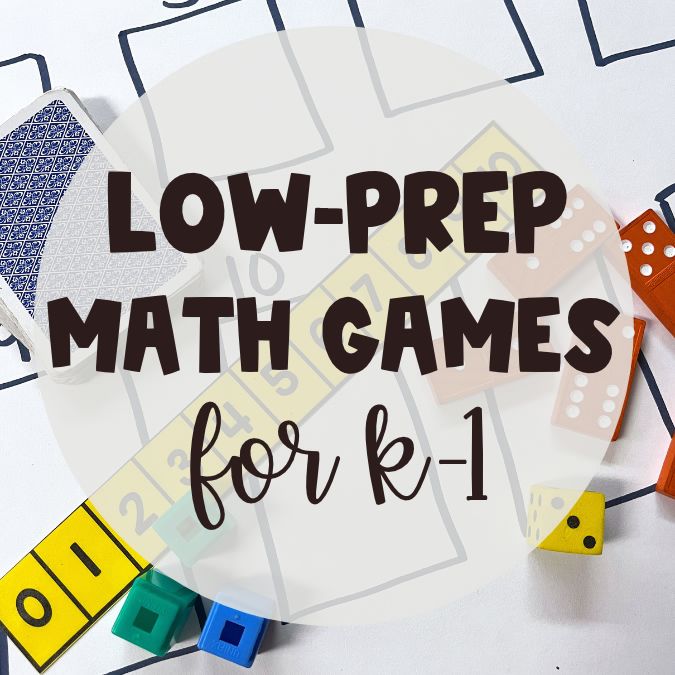
The five games below use things you already have, like dice, dominoes, playing cards, counters, and snap cubes. There’s nothing to print and almost nothing to set up, so you can teach a game in a few minutes and then use it for centers, partner time, early finishers, or a quick filler before dismissal.
Each game has a kindergarten version and a first-grade version, so you can use the same game all year as your students grow. For more tools to keep on hand, check out my post on favorite math manipulatives for kindergarten.
This post contains affiliate links. If you purchase through them, I may earn a small commission at no extra cost to you. Thank you for supporting my blog!
5 low-prep math games for kindergarten and first grade
1. Domino Sort
Materials: a set of dominoes. Players: 1 to 2.
Spread the dominoes out on the table. Children count the dots on each domino and sort them into groups by the total number of dots.
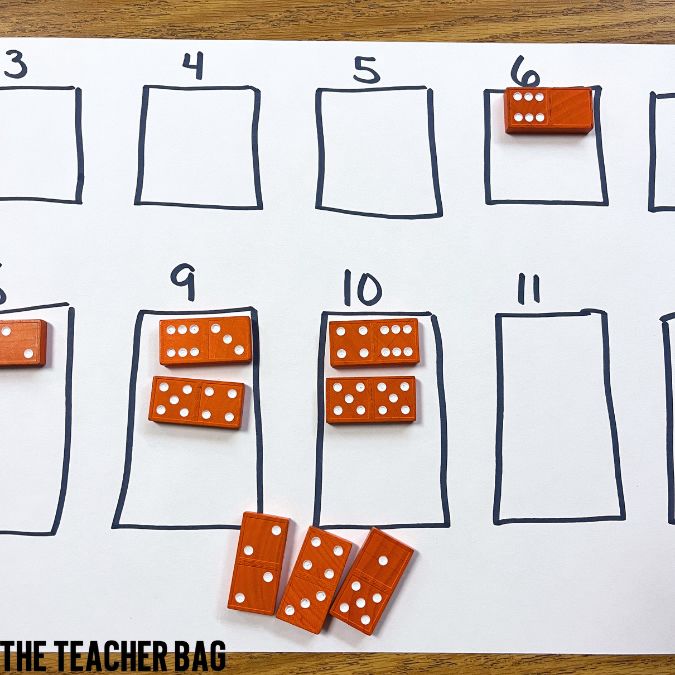
Kindergarten: Count the dots and sort the dominoes into piles labeled with the totals, like 3, 4, and 5.
First grade: Write an addition sentence for each domino, like 3 + 2 = 5, and look for different dominoes that make the same total.
2. Roll and Fill a Ten Frame
Materials: a die, counters, a ten frame- one per player (draw one on a sheet of paper). Players: 2.
Take turns rolling the die and putting that many counters on your ten frame. The first player to fill the ten frame wins.
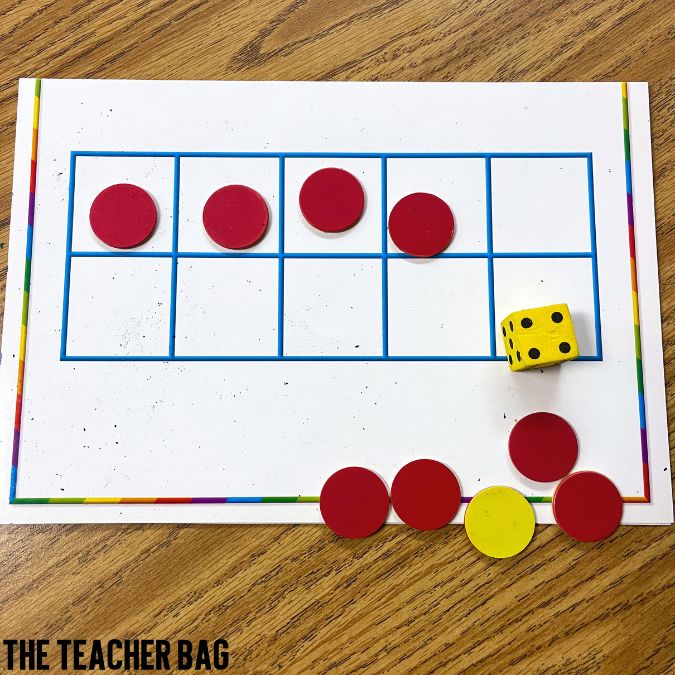
Kindergarten: Count each counter as you place it, and say how many are on the frame.
First grade: After each roll, say how many more you need to make 10, and ask what number sentence it shows.
3. Add It Up (a card game like War)
Materials: a deck of playing cards with the face cards removed. Players: 2.
Deal the cards evenly. Each player flips over one card at the same time. The player with the bigger number takes both cards, and the player with the most cards at the end wins.
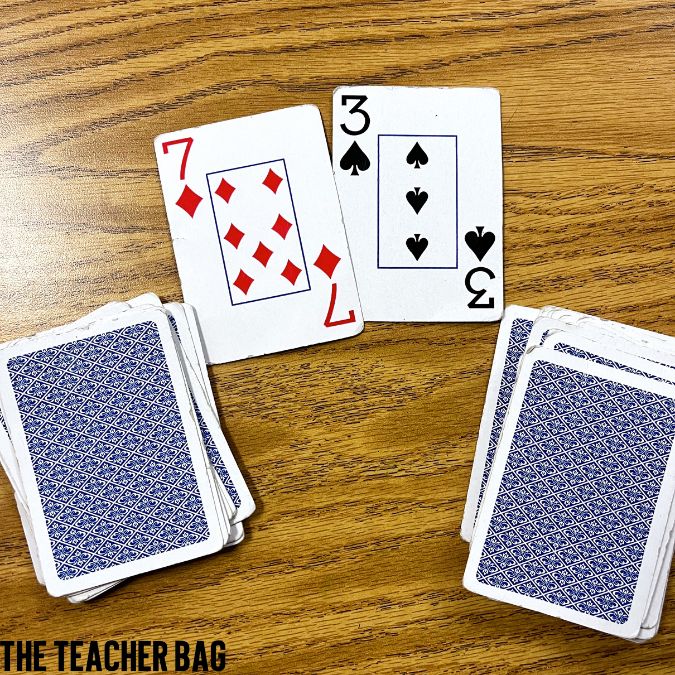
Kindergarten: Compare the two numbers and say which is more, which is less, or if they match.
First grade: Each player flips two cards and adds them. The player with the higher sum wins the round.
4. Guess My Number
Materials: none. Players: the whole class, a small group, or partners.
Think of a secret number in a range, like 1 to 10. Children take turns asking yes or no questions, such as “Is it more than 5?” or “Is it even?” The child who guesses it correctly picks the next secret number.
Kindergarten: Use a range of 1 to 10 and keep a number line on the board.
First grade: Use 1 to 20, or 1 to 100 with a hundred chart, and encourage questions about tens and ones.
5. Snap Cube Towers
Materials: one die per player, cubes. Players: 2.
Each player rolls a die and builds a tower with that many cubes. Put the towers side by side and compare them.
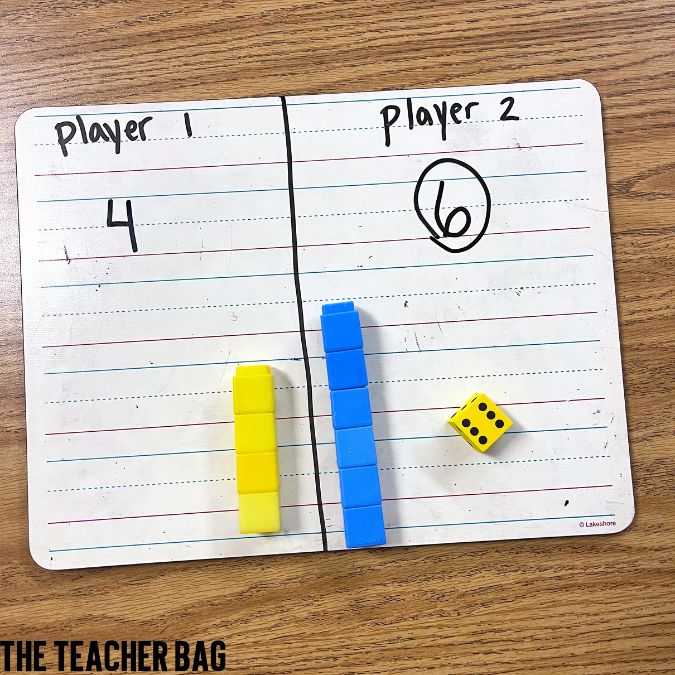
Kindergarten: Decide which tower has more cubes, which has fewer, or if they’re the same.
First grade: Add both towers together, or find the difference by counting how many more cubes one tower has. Write the number sentence.
Tips for making math games run smoothly
- Teach the game first. Play a round with a volunteer in front of the class before sending children to play on their own.
- Keep the noise down. Foam dice are quiet, and rolling dice into a cup or a small box keeps them from bouncing across the floor.
- Use a game bag. Put the dice, counters, and any other items for each game in a labeled bag so centers are easy to set up and clean up.
- Start with the easier version. Move to the first-grade version once children can play the game without help.
- Watch and listen. Games are a great time to hear how children think, so ask “How do you know?” and take quick notes.
- Add a holiday twist. Swap in thematic erasers for counters! It’s the same game with a seasonal look.
Keep math fun all year long
These games work any time of year, so keep the materials handy and bring them back whenever you need a quick, no-fuss way to practice math skills. If you want more math practice, take a look at my Addition and Subtraction Math Activities and Write the Room Bundle.
What’s your favorite low-prep math game? Share it in the comments so we can all try it!