
Kindergarten Parent-Teacher Conferences: A Stress-Free Guide
Kindergarten Parent-Teacher Conferences: How to Make Them Calm, Positive, and Productive
Conference season seems to sneak up on you. One minute you’re enjoying fall, and the next you have a stack of 20-minute slots, a pile of work samples, and a to-do list a mile long.
After many years in the classroom, I can tell you that conferences with our youngest learners are different from any other grade. For many families, this is their first parent-teacher conference ever. They may be nervous, and some are wondering whether their child is “behind.” Our job is to help them leave feeling informed, hopeful, and like we’re on the same team.
Here’s the system I use to keep conferences organized and low-stress.
1. Start with a plan for the 20 minutes
Twenty minutes goes fast. I like to follow the same flow every time:
- Minutes 1-3: Start with something positive. Share a specific strength or a sweet moment.
- Minutes 4-10: Academics. Cover reading, writing, and math using work samples.
- Minutes 11-14: Social and emotional growth. Cover friendships, following routines, and stamina.
- Minutes 15-18: Next steps and goals. Share one or two simple things the family can do at home.
- Minutes 19-20: Questions and wrap-up. Ask, “Is there anything you’d like me to know about your child?”
That last question is my favorite. Parents often share things that help me understand the child better.
2. Bring work samples, not just words
Parents love seeing real evidence. For each child, I gather:
- A writing sample from the beginning of the year and a current one
- A letter and sound assessment, or sight word list
- A number sense snapshot (counting, number writing, and so on)
- A drawing or piece of work the child is proud of
Showing growth side by side is powerful. It turns “he’s learning” into something families can see.
3. Talk about reading progress in plain language
Families don’t need “phonemic awareness” or “decoding,” but they do want to know what their child can do and what comes next. Try phrases like:
- “She knows 22 of the 26 letters and is starting to match sounds to letters.”
- “He’s working on blending sounds to read short words like cat and sit.”
- “She’s reading these words by sight now, which is great progress.”
Then give one specific way to help at home, like practicing letter sounds for five minutes or reading a favorite book together every night.
4. Handle the tough conversations with kindness
Some conferences include concerns, and that’s okay. A few things that help:
- Start with strengths, then name the concern. “Here’s what’s going well, and here’s where I’d like to see more growth.”
- Be specific, not vague. “He has trouble staying with the group during carpet time” is better than “he has behavior problems.”
- Share what you’re already doing. Parents feel reassured when they hear your plan.
- End with a next step. Even something small gives families a sense of direction.
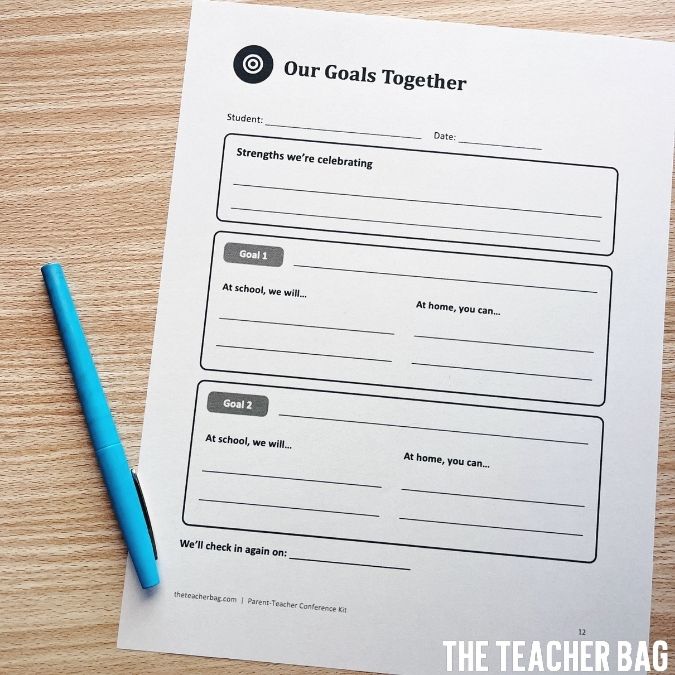
5. Prepare a simple take-home page
Parents will forget a lot of what you say in 20 minutes, and that’s normal. A one-page summary with strengths, goals, and ways to help at home gives them something to hold onto, and it makes you look wonderfully organized.
6. Don’t forget the logistics
A few small details make a big difference:
- Send a reminder a few days before, with the time and a note about where to wait.
- Put out a few chairs for waiting families.
- Offer translated materials if you need them.
- Keep a timer visible so you stay on track.
- Keep tissues and water nearby. Conferences can be emotional, and this is a big deal for parents of little ones.
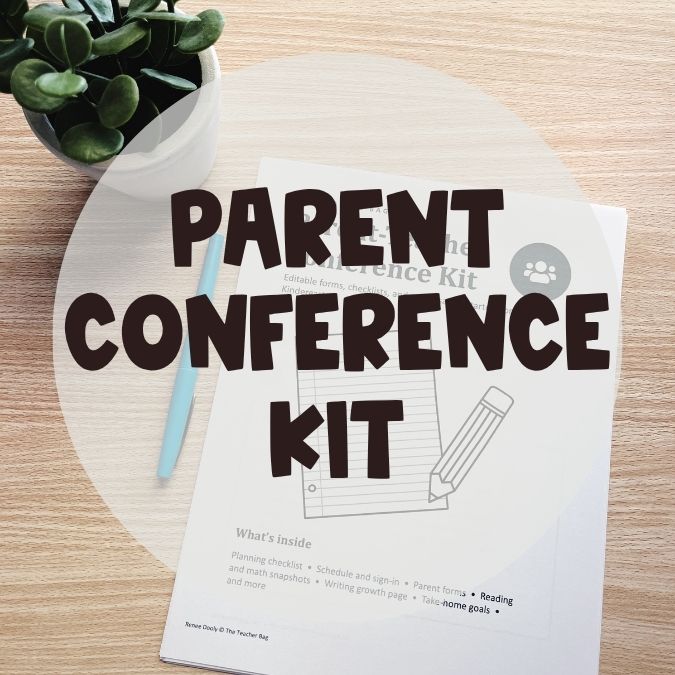
Grab my free Parent-Teacher Conference Kit
To make conference week easier, I put together everything you need in one download.
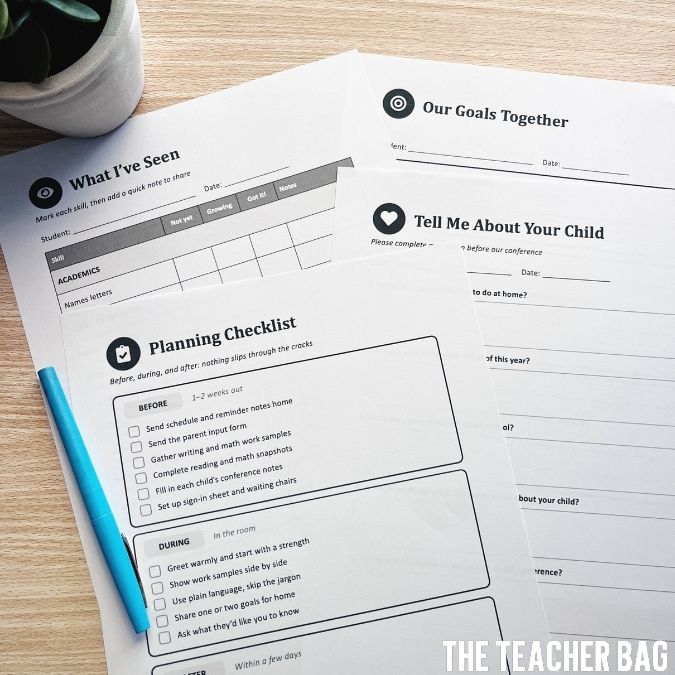
Inside you’ll find:
- A conference planning checklist
- A scheduling and reminder sheet
- A student information form for parents to complete before the conference
- A “What I’ve Seen” observation sheet for notes
- A reading, writing, and math progress summary
- A take-home goals page for families
- Conversation starters and positive phrases for tough topics
- A “Ways to Help at Home” page with simple ideas
Grade the parent conference kit below.
I hope this takes some of the stress out of conference week. If you have a favorite conference tip, I’d love to hear it in the comments!