
Pumpkin Direct Drawing for the Classroom
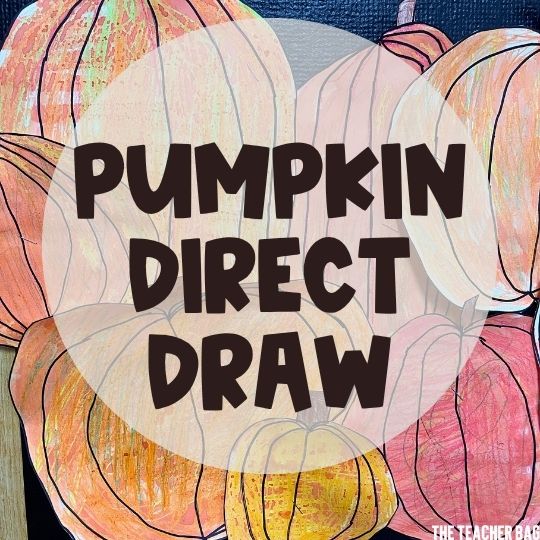
Fall is my favorite time of year, and pumpkin direct drawing is one of my favorite projects in my kindergarten classroom. They are simple, they build real skills, and they look amazing on a bulletin board or hallway display.
What You Need
The supply list is short, and you probably already have everything in your room.
- White drawing paper (cardstock or construction paper works too)
- Pencils
- Black crayons or black fine-tip markers for tracing
- Crayons or oil pastels in the shades of orange, green, and brown
- Watercolors (we use liquid watercolors)
How to Draw a Pumpkin, Step by Step
Draw each step on the board or under a document camera, then give students time to copy it before you move on. Students will need to decide if they want a tall pumpkin (vertical paper) or a short pumpkin (horizontal paper).
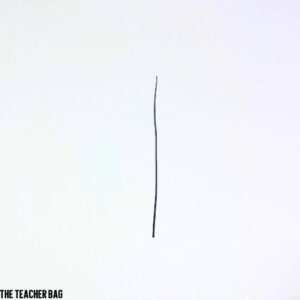
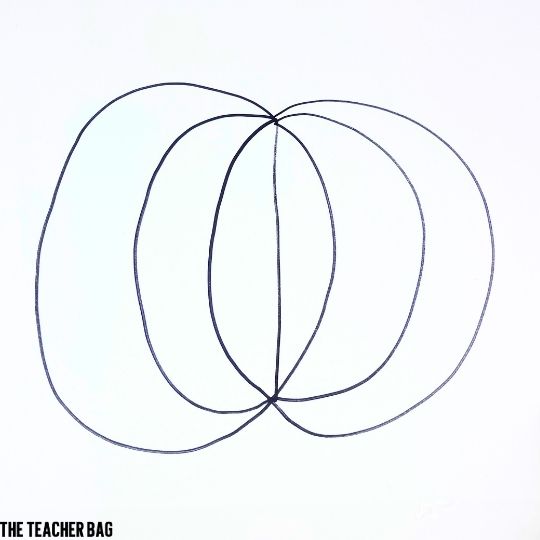
1. Draw the pumpkin body. Start with a straight line down the middle of the paper
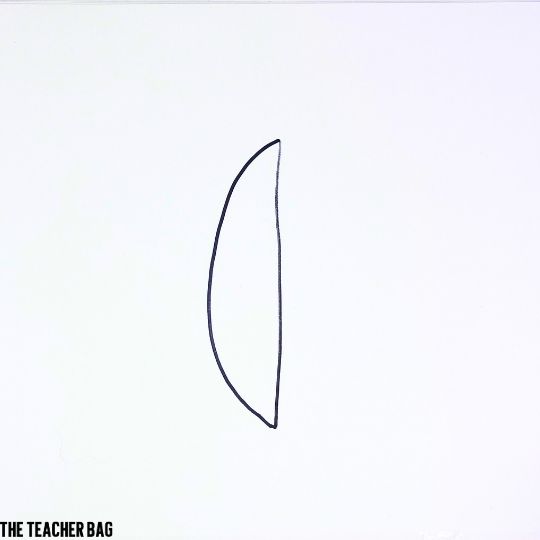
Add the side sections. Draw 3 curved lines on the left side of the line, then 3 curved lines on the right. These make the pumpkin look round and ribbed.
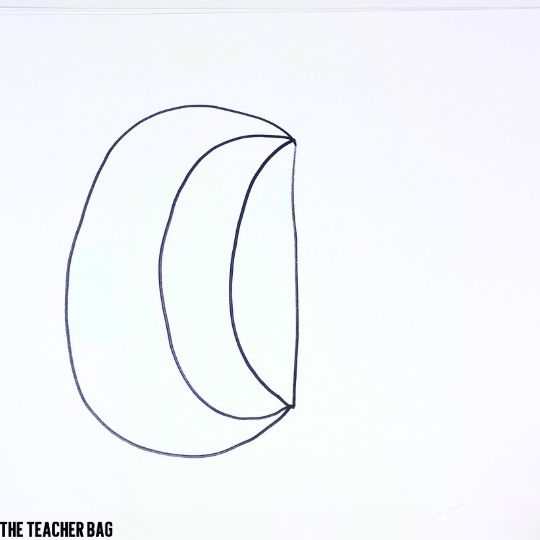
Add the stem. Draw a short, thick rectangle at the top.
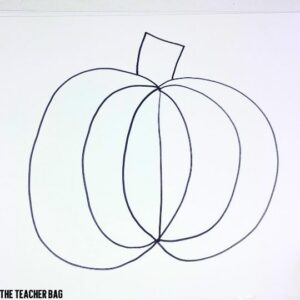
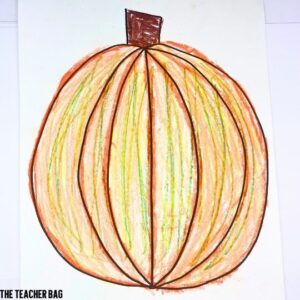
Trace with black. Have students trace their pencil lines with a black crayon or marker. Color it in. Color the pumpkin with shades of orange, adding yellow and green if you wish. I like to have a few real pumpkins in the class so we can see the color variations.
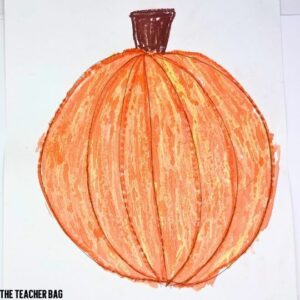
Add a watercolor wash. Using orange watercolor, paint over the pumpkin. The watercolor fills in any white spaces and makes the crayon color pop. We use liquid watercolors for this project.
Pumpkin Direct Draw Video
Ways to Extend the Project
A pumpkin direct drawing can become a full literacy and math lesson.
- Writing: Have students write a sentence below their drawing, such as “My pumpkin is ___.” Kindergarten students can label pumpkin parts, and 1st graders can write two or three sentences.
- Five senses: Describe how a pumpkin looks, feels, smells, and sounds, then record the ideas on a chart.
- Math: Count seeds, sort pumpkins by size, or graph how many pumpkins are tall, short, or round.
- Display: Hang the finished pumpkins together with their writing for a bulletin board or hallway “pumpkin patch.”.
If you want to read about more pumpkin activities, read this post.
Check out these Pumpkin Resources


I would love to see your pumpkin direct drawing. Tag me on Instagram at @the_teacher_bag!